
Pizza Napoletana and Roman Pizza Styles: Why “Italian Pizza” Is Not One Thing
Outside Italy, pizza is often treated as one universal dish. Inside Italy, dough texture, baking method, shape and eating occasion can change dramatically from one city and style to another. Naples and Rome offer two of the clearest examples.
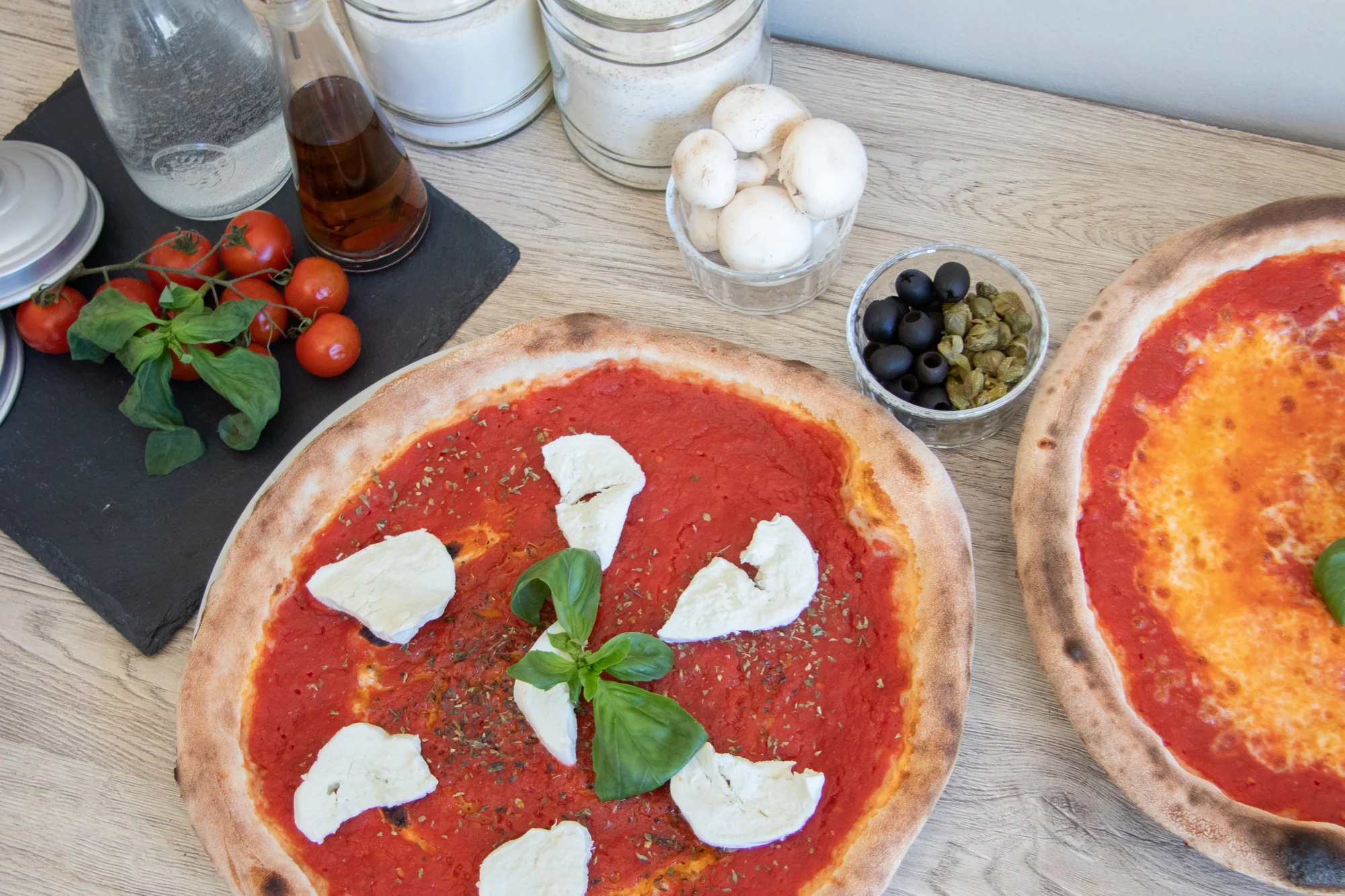
Pizza Napoletana: Soft, Airy and Fast-Baked
Pizza Napoletana is registered in the European Union as a Traditional Speciality Guaranteed (TSG), with a specification that defines ingredients and preparation for the protected name. It is associated with a soft centre, a raised and airy cornicione and a very short bake in an extremely hot wood-fired oven.
The finished pizza is flexible rather than cracker-crisp. It may be eaten at the table with knife and fork or folded for street eating. The softness of the centre is part of the style, not a sign that the pizza is undercooked.
Rome Has More Than One Pizza Style
“Roman pizza” is not a single strict category. One familiar form is pizza romana tonda: a round pizza known for a thinner, crisper base. Another is pizza al taglio, baked in rectangular trays, cut into pieces and commonly sold by weight.
These formats create a different eating experience from Neapolitan pizza. Crispness, portability and slice-based service can matter as much as the topping itself.
Regional Style Changes Technique
The contrast between Naples and Rome shows why pizza should be understood as a family of Italian traditions rather than one standardised product. Flour choice, dough management, fermentation, shaping, oven type and serving format all contribute to the result.
Neither approach is “better.” A soft Neapolitan pizza and a crisp Roman pizza are trying to achieve different textures.
Culture Is Part of the Product
In 2017, UNESCO inscribed the art of the Neapolitan pizzaiuolo on the Representative List of the Intangible Cultural Heritage of Humanity. The recognition concerns the craft, gestures, knowledge and social practice surrounding the pizzaiuolo - not simply a recipe.
That distinction is useful for consumers: authentic food culture is not created by an Italian flag on a package alone. It comes from technique, context and continuity of practice.
LuxurEat (露意膳) Perspective
For LuxurEat (露意膳), a stronger pizza proposition begins by explaining these differences. Flour blends, tomato, EVO and other products become more meaningful when the consumer understands which Italian style they are intended to support and what texture or technique that style is trying to achieve.
