
Morning at the Dairy: Parmigiano Reggiano Cheesemakers and the Land of Emilia
Parmigiano Reggiano production begins early in the day. Inside a traditional dairy, the cheesemaker is not simply following an entirely automated formula.
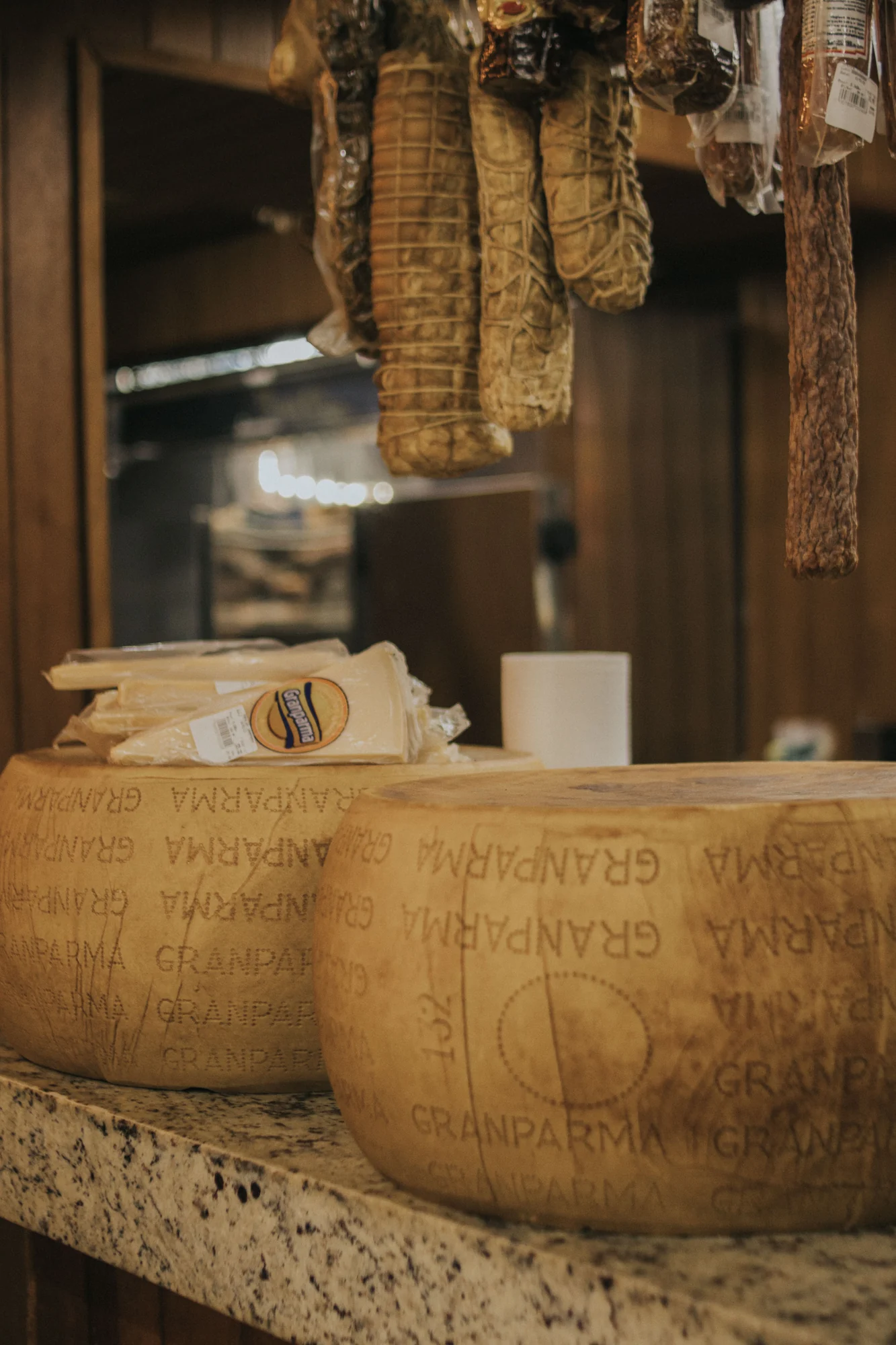
Milk, temperature, timing, and curd behaviour require constant judgement.
The Italian word for this professional is casaro.
Parmigiano Reggiano Is First a Product of Place
Authentic Parmigiano Reggiano belongs to a legally defined production territory.
Milk production, cheesemaking, maturation, and the protected production system are tied to Parma, Reggio Emilia, Modena, and defined areas of Bologna and Mantua.
This means Parmigiano Reggiano is not simply a recipe invented in one place and freely reproduced anywhere.
Its identity legally connects the cheese to the land.
The Cheesemaker Makes Decisions Every Day
Official production information notes that roughly 550 litres of milk are required for one wheel of Parmigiano Reggiano.
The milk coagulates before the curd is broken, heated, shaped, salted, and eventually matured.
The craft, however, lies in more than memorising the sequence.
Milk changes.
The cheesemaker must judge the curd, temperature, timing, and texture.
Technology can create stable working conditions, but professional experience remains fundamental.
The historical archive of Parmigiano Reggiano even describes the cheese as something that is “made” rather than merely “produced,” emphasising the bond between human skill and territory.
After the Copper Vat, Time Takes Over
Parmigiano Reggiano is not finished on the day it is made.
Long maturation gradually changes moisture, texture, aroma, and flavour.
A younger cheese and one matured for 24, 30, or more months may behave quite differently at the table and in cooking.
Maturation is therefore important product information.
Simply writing “Italian Parmesan-style cheese” removes much of what makes the real product understandable.
Territory Is Not Background — It Is Part of the Product
The official Parmigiano Reggiano system repeatedly emphasises the connection between the cheese and its production area.
Farmers, milk, dairies, cheesemakers, maturation warehouses, and land form one continuous production culture.
The real story is therefore larger than one celebrity cheesemaker.
It is a network of people maintaining a shared craft.
LuxurEat(露意膳) Perspective
When LuxurEat(露意膳) introduces an Italian cheese, the story should not stop at the name.
Useful information includes:
where it was produced;
how long it was matured;
how the texture changes;
whether it is suited to grating, risotto, cooking, or eating in pieces.
The more precisely defined a traditional food is, the more clearly its story should be told.
Premium value does not come from making information mysterious.
It comes from helping people understand what they are tasting.
