
Regional flavour: how tradition stays on the table
Italian food is not only a list of dishes; festivals, seasons and family habits shape how flavour is made and shared.
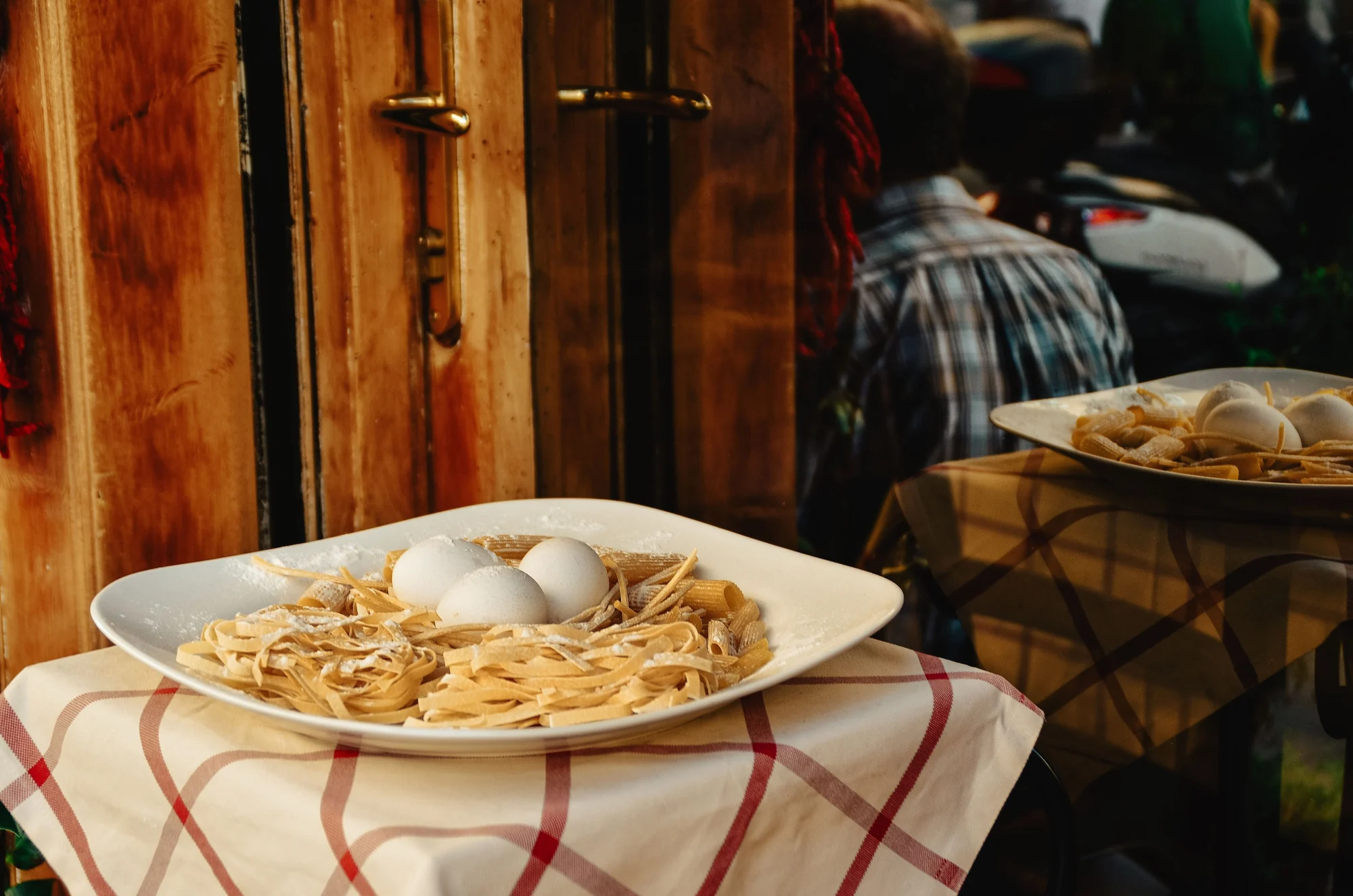
The same ingredient can be handled in entirely different ways from one place to another. Preservation, climate, availability and inherited experience all matter.
Season is the first seasoning
Tender spring vegetables, summer tomatoes, autumn mushrooms and winter stews keep the table connected to the land.
Festivals and sharing
Many regional dishes are repeated at festivals and family gatherings, carrying memory, ritual and community at once.
Tradition in modern life
Italian homes use modern equipment and new channels, while preserving tradition through clarity of flavour, proportion and respect for ingredients.
Season is the first menu
Tender spring vegetables, summer tomatoes and fruit, autumn nuts and mushrooms, and winter pulses or slow-cooked dishes connect the table to production cycles. Modern supply is broader, but maturity and season still alter aroma, moisture and the most suitable method of preparation.
Eating seasonally is not a search for scarcity. It is a way to recognise when an ingredient benefits from simple handling and when preservation, concentration or a balancing ingredient can make better use of it.
Preservation leaves a regional accent
Drying, salting, fermenting, smoking and preserving in oil originally answered storage and transport needs. Over time they became defining flavours. Because preservation changes moisture, salt, acidity and texture, the ingredient must be used in a proportion that considers those changes.
Contemporary products still need clear labels, storage instructions and safety controls. A cultural story may explain why a method exists, but it cannot substitute for current product information or responsible handling.
Celebrations and oral knowledge
Foods repeated at religious holidays, harvests, weddings or reunions carry meaning through the people who prepare them, the moment when they are served and the way they are shared. Moving such a food into everyday life can be thoughtful when its original context is not erased.
Family cooks often judge sound, smell, touch and appearance rather than a stopwatch alone. Responsible teaching translates that experience into observable signs—dough elasticity, sauce adhesion or surface colour—while explaining how equipment and ingredients may require adjustment.
Tradition in a new kitchen
Bringing Italian ingredients to a Chinese table does not require copying every condition of one Italian household. The key is to preserve the method's purpose, then adapt side dishes, portions and equipment to local seasons and ways of sharing food.
A credible account names the place and situation and acknowledges that several family versions may coexist. Tradition should not become a vague marketing badge; it should give readers enough background to distinguish a flexible custom from a product fact that must be verified.
Documenting a tradition responsibly
Oral knowledge is valuable, but it benefits from context. Record who demonstrated a method, where it was used, what season and occasion it belonged to, and which details the cook considered essential. A family memory should not automatically be presented as the rule for an entire region.
Measurements can support rather than diminish inherited skill. Weighing ingredients, recording temperature and describing texture make a method easier to repeat, especially when it moves to a different flour, oven or climate. The aim is to translate observation, not to replace it with numbers alone.
Food traditions also change when ingredients become scarce, regulations evolve or families move. Responsible adaptation names the change and explains what function the substitute performs. It does not claim that the new version has always existed, nor does it treat change as proof that the tradition is meaningless.
For brands and educators, images, dates and quotations should be traceable. Product claims must remain tied to current files, while cultural interpretation should acknowledge multiple versions. This combination protects both the people behind the tradition and the reader making a practical choice. A short source note and review date make later corrections much easier.
