
A Map of Italian Truffles: Why Alba Is Not the Only Important Territory
Ask someone to name an Italian truffle destination and one answer appears more frequently than almost any other: Alba. The association is understandable.
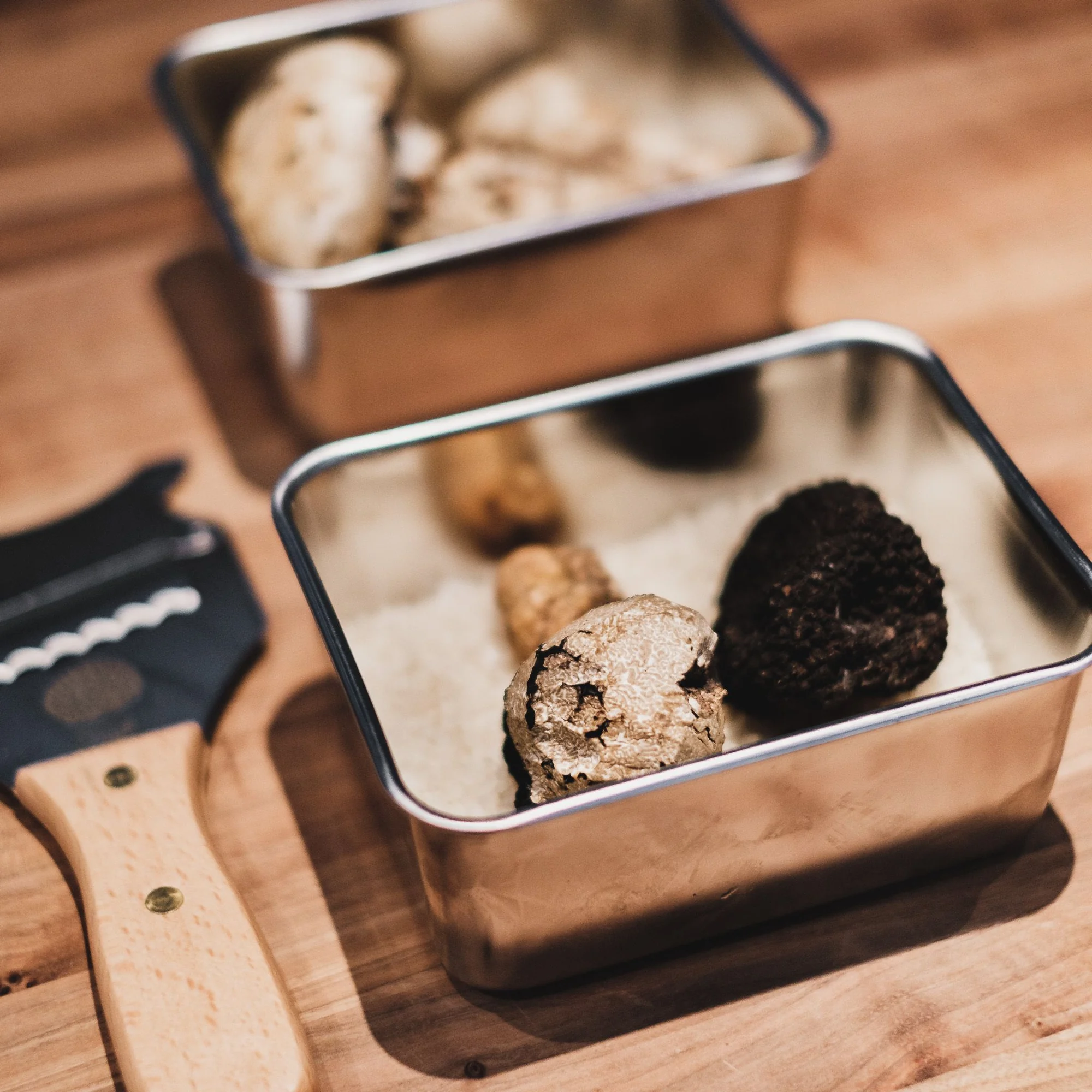
Piedmont has developed an internationally recognised white truffle culture, and Alba has become one of the strongest symbols of Italian white truffle.
But reducing Italian truffles to Alba alone means missing one of the most interesting characteristics of Italian food culture:
Truffle traditions are deeply regional.
Piedmont: One of the Great Symbols of White Truffle
Piedmont in north-western Italy has one of the country's most established truffle cultures.
The region is strongly associated with precious white truffle, but its truffle environment is not limited to one species.
Precious black truffle, summer truffle, and other species are also part of the regional truffle landscape.
What makes Alba important is not simply that its name can increase the perceived prestige of a product.
Over time, truffles have become connected with local cuisine, seasonal markets, hunting traditions, tourism, and regional identity.
That is what gives a territory real meaning.
Umbria: A Strong Black Truffle Tradition
If Piedmont often brings white truffles to mind, the central Italian region of Umbria has a particularly strong relationship with black truffles.
Areas such as Norcia, Spoleto, and the Valnerina are closely connected with black truffle traditions and with the broader agricultural and culinary identity of the region.
Local truffle culture is linked to mountain landscapes, meat, cheeses, pasta, and traditional dishes.
Understanding Umbrian truffles therefore means understanding a regional food culture that is quite different from the one surrounding white truffles in Piedmont.
Marche: Acqualagna and Multiple Truffle Species
The Marche region also has a significant truffle tradition, with Acqualagna among its most recognised centres.
The region is associated not only with precious white truffle, but also with precious black truffle, summer truffle, hooked truffle, and other edible species.
This diversity makes an important point very clear:
A single Italian region can contain several different truffle seasons and several different truffle traditions.
A place of origin is therefore much more than a marketing label.
It can reflect species, climate, harvesting periods, landscape, and local culinary habits.
Why Does Origin Matter So Much for Truffles?
Many industrial foods can be produced under highly standardised conditions.
Truffles are different.
They are agricultural and ecological products strongly influenced by their natural environment.
Even within the same species, year, maturity, weather, soil, and local conditions can influence the final experience.
Talking about origin should therefore not be about creating a ranking of the “best” Italian truffle region.
A more useful set of questions is:
Why does this truffle grow here?
Which species are associated with this area?
How do local people traditionally use it?
When these questions can be answered, “Italian origin” becomes meaningful information rather than a decorative claim.
Discovering Italy Through Truffle Territories
Truffles can become a particularly effective way to understand regional Italian gastronomy.
Piedmont introduces the world of white truffle and northern Italian culinary culture.
Umbria introduces central Italian mountain landscapes and black truffle traditions.
Marche demonstrates how several truffle species can coexist within one region and one culinary system.
A real Italian truffle map should therefore not be a ranking.
It should be a map connecting:
land → ingredient → local cuisine → cultural practice.
LuxurEat(露意膳) Perspective
For LuxurEat(露意膳), “Made in Italy” should be understood as the beginning of the story rather than the end.
Whenever possible, products can be connected more precisely with their territory, producer, truffle species, and local culinary tradition.
LuxurEat(露意膳) does not simply aim to present “Italian truffle products.”
The broader objective is to help consumers understand where the ingredient comes from, why it has a particular identity, and how it can be experienced through food.
In this way, the product itself becomes one possible route into Italian culture.
