
White Truffle, Black Truffle and Summer Truffle: What Is the Difference?
One of the most common misunderstandings among people discovering truffles for the first time is simple: Aren’t all truffles basically the same, apart from the colour?
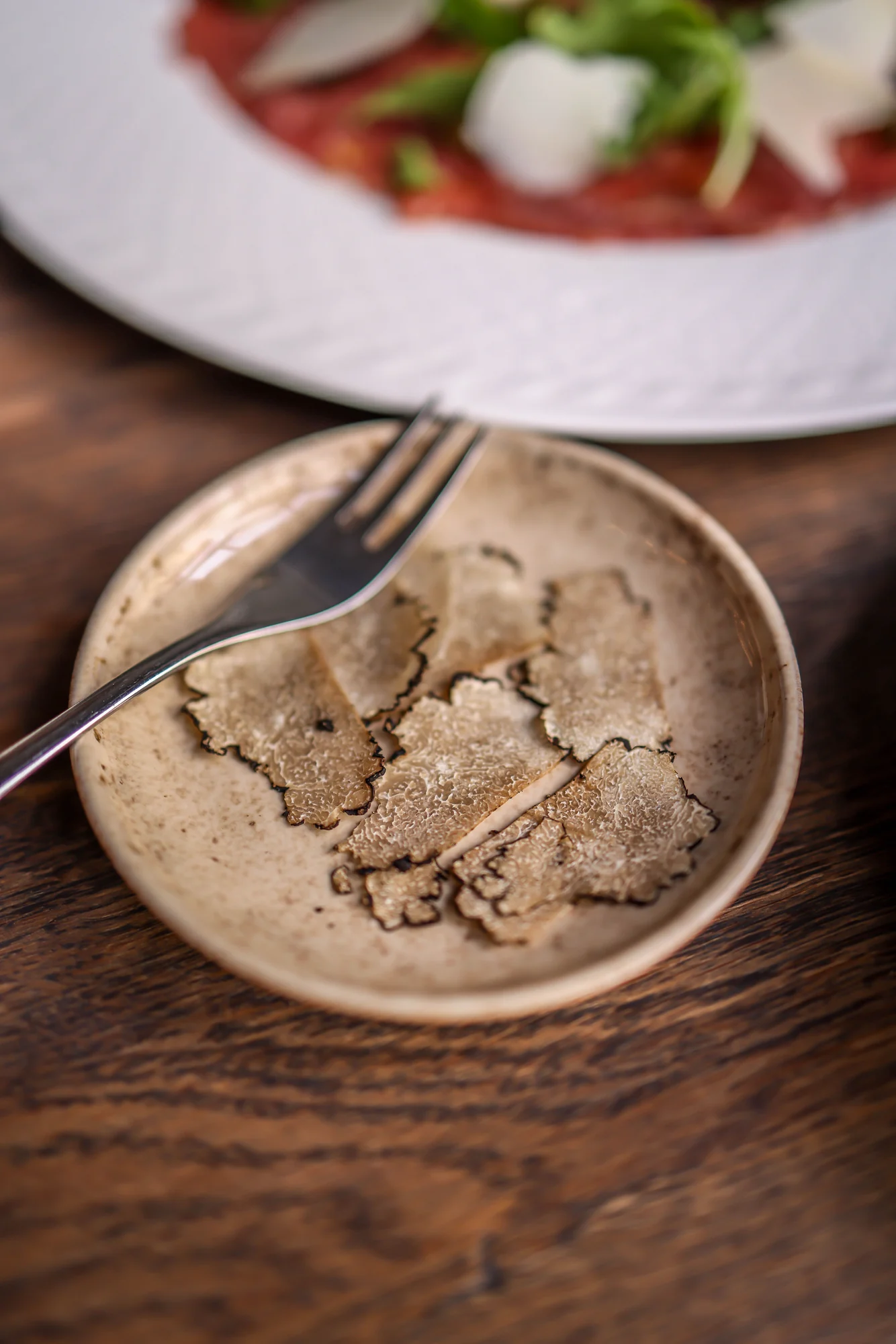
They are not.
Precious white truffle, precious black truffle, summer truffle, and other edible truffle species are botanically distinct.
They can differ in seasonality, aroma, culinary behaviour, availability, and market value.
Italian regulations themselves distinguish between different edible truffle species rather than treating “truffle” as one single category.
Precious White Truffle: When Aroma Becomes the Main Ingredient
Precious white truffle is one of the most highly valued truffles associated with Italian gastronomy.
Its mature aroma can be exceptionally distinctive and complex.
For this reason, it is commonly used in preparations where the truffle does not need to undergo prolonged cooking.
Warm dishes such as eggs, pasta, risotto, potatoes, and mild cheeses can provide a neutral background while helping release the aroma of freshly sliced truffle.
The purpose of these ingredients is not to compete with the white truffle.
It is to give it enough space to remain clearly recognisable.
Precious Black Truffle: Deeper and More Integrated Into the Dish
Precious black truffle represents another important Italian truffle tradition.
Its aromatic character is different from that of white truffle and is often perceived as deeper, warmer, and more earthy.
It can be incorporated into a wider range of preparations and is often associated with meat, potatoes, eggs, cheese, sauces, and pasta.
The objective is still not to use as much truffle as possible.
It is to allow its aroma to become an intentional part of the overall dish.
Summer Truffle: Milder and Highly Versatile
Summer truffle generally presents a more delicate aromatic profile than precious white or precious black truffle.
This does not mean that it has “no flavour.”
It simply means that it belongs to a different culinary context.
Summer truffle can work particularly well in pasta, egg dishes, cream-based preparations, meat dishes, sauces, and processed truffle products.
When a dish needs a recognisable truffle character without an extremely dominant aromatic intensity, summer truffle can offer a useful alternative.
Truffles Have Seasons
Different truffle species do not naturally reach maturity at the same time throughout the year.
Precious white truffles are generally associated with the autumn and winter period.
Precious black truffles are traditionally associated with winter.
Summer truffles, as the name suggests, are primarily linked to the warmer months.
Exact authorised harvesting periods can vary between Italian regions, so there is no single permanent calendar that applies identically throughout the country.
This is why a proper discussion of seasonal truffles should always ask three questions:
Which species? Which region? Which harvesting period?
Price Is Not the Only Way to Compare Truffles
Precious white truffles can reach extremely high market prices.
That does not mean that every product or every recipe should use white truffle.
Ingredient choice depends on purpose.
Someone looking for the experience of freshly shaved truffle may require one type of product.
Someone preparing a sauce, seasoning, spread, or more stable everyday application may need something completely different.
The most expensive ingredient is not automatically the most appropriate ingredient for every product.
LuxurEat(露意膳) Perspective
When LuxurEat(露意膳) presents truffle products, the most useful approach is to explain clearly which type of truffle is actually being used rather than relying only on the generic word “truffle.”
A product page becomes much more meaningful when it explains:
- the truffle species;
- the percentage used when relevant;
- the main supporting ingredients;
- the expected flavour profile;
- recommended culinary uses.
This allows the value of LuxurEat(露意膳) products to come from information consumers can understand and verify, rather than relying only on abstract words such as “precious,” “exclusive,” or “luxury.”
